Free flights to Japan

Will the Japanese really give away 10,000 free flights?

I just came across a rumour that Japan is planning to give away 10,000 free flights as a way of attracting visitors back after the earthquake and tsunami. If this giveaway happens, it’s thought it will begin in April. I was thinking of going to the Outer Hebrides next summer, but if I could get a free flight to Japan I’ll definitely go there instead.

The sun’s got spots!

Why this is a particularly good time to see the Northern Lights.

I’ve been reading up on the Northern Lights and this is a really good time to go to see them. The sun operates in a 12 year cycle and every 12th year it gets spots. These sunspots are visible without a telescope (though eclipse type glasses are recommended to avoid damaging your eyes) and are caused by particles being expelled from the sun. It’s particles from the sun that cause the effects seen as the Northern Lights. The particles are dragged towards the two magnetic poles and then swirl around in the atmosphere causing the multi-coloured lightshow effect. The closer to the poles you are the more strobe like are the lights. In Scotland, on the odd occasion that they are seen, they tend to appear only as a pale swathe of colour on the horizon. Green and red coloured lights are caused by oxygen particles and the less common blue lights are caused by nitrogen.

Not only is sun at the height of its 12 year expulsion cycle, but some experts reckon it is the most active its been for 50 years. So with all these extra particles floating about surely I’ve got to see them! 

Q&A

Questions and answers about travel.

I came across these questions and answers in Alastair Humphrey’s blog and they got me thinking about what my responses would be. It’ll be interesting for me to look back on them in a year or two’s time and see if my answers are still the same.

Mountain/ocean/jungle/desert – which are you?
I like all of them for different reasons. It’s too hard to call.

What was your first great travel experience?
Either going on a college trip to Russia back in the 1980s when it was still hidden behind the iron curtain, or interrailing around Europe for a month. I did both with the same friend within the space of a few months and I’m not sure which came first.

Favourite journey?
Travelling overland through Africa using of mix of walking and hitching with the occasional bit of public transport thrown in.

Top five places worldwide?
Unst, Shetland; Sydney; Zaire (or the Democratic Republic of Congo as
it’s known now); Iceland; London

Name a special place to stay.
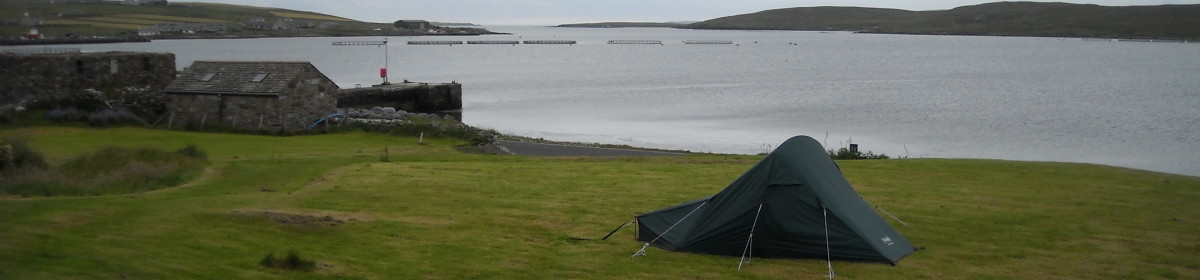
In my tent on the grass in front of the youth hostel in Uyeasound, Unst. It’s peaceful and I can while away the evenings sitting in the conservatory at the back of the hostel chatting to interesting people and watching the sun go down and distant lights come on across the water.

What three items do you always pack?
Decent coffee, something to read and a toilet roll.

Which passport stamp are you proudest of?
The USSR

Which passport stamp would you most like to have?
Antarctica

What is your guilty travel pleasure?
Good coffee – either making my own or finding a really good coffee shop like the minuscule Cafe Haiti in Reykjavik

Which do you prefer: window or aisle?
Window

Who is your ideal travelling companion?
I like to travel alone and meet people as I go.

Best meal on the road? And your worst?
Best – a little breeze block and cardboard cafe called ‘Stop n Eat’ in a suburb of Nairobi. It served the best cabbage in the world.
Worst – Communist Russia back in the 1980s. They had no concept of vegetarianism and so all I got to eat was coleslaw. As the other people in the group didn’t like their coleslaw they would give theirs to me. All I had to eat for the best part of a fortnight was a big plate of coleslaw twice a day. It took a few years before I could even look at it again.

Most surprising place? And your most disappointing?
Surprising – most recently was Minehead. I was there earlier this year when I walked some of the South West Coast Path. I was just expecting it to be tacky, but it really wasn’t bad. The train station area is really nice and I found a lovely cafe for lunch.
Disappointing – I’ve never really been disappointed with a place. I can usually find something to interest or intrigue me no matter where I am.

Where do you NOT want to go?
Although there are places that aren’t high on my list, there’s nowhere I wouldn’t want to go to given half the chance.

Who/what inspired you to travel?
I’ve always had itchy feet. Ever since I can remember I’ve always loved holidays, days out, etc, and would cry when I had to come home.

Any travel heroes?
The travel heroes that have inspired me the most are the ordinary people doing extraordinary things that I’ll sometimes be fortunate enough to meet when I’m travelling.

What do you listen to on the road?
I don’t take music with me, so either the sounds of nature, or whatever music is being played in local cafes and shops.

Does any song take you back to a particular place?
Bob Marley takes me straight back to my kibbutz days in the late 80s.

What do you read when you travel?
Books with a connection to the place: factual books about the place; novels set in the place; books written by someone from the place.

Is there a person you met while travelling who reaffirmed your faith in humanity?
Lots and lots. And hopefully some of them have felt the same way about me!

What’s the most impressive/useful phrase you know in a foreign language?
patatje oorlog met uitjes – it’s my favourite junk food in the Netherlands. This is the colloquial term for it and so I like to think it makes me sound like a local 🙂

What is your worst habit as a traveller?
Bad habits? Me? Never!

Snowbound in a tent in Antarctica, how would you entertain your companions?
Sharing stories.

When and where in your travels have you been happiest?
Lots of places, but over the last few years in Unst in Shetland. I feel so relaxed there.

What smell most says ‘travel’ to you?
Smoke from the fires at roadside stalls. I think it’s why I like lapsang souchong tea so much. The smell just takes me straight to Africa.

Given a choice, what era would you travel in?
It has to be a place as well as an era. Kenya, particularly Nairobi, in the 1920s.

If you could combine three cities to make your perfect metropolis, which would they be?
The bustle and internationalism of London with the look of Sydney and the vibe of Reykjavik.

Creswell Crags Walk

Caves, quarries and an unexpected tea shop.

Sunday 27th November, 2011


This was a walk in an area I don’t know at all. I’d always thought it too far away for a day walk, but with the help of TomTom I got to the meeting place of Whitwell in just over an hour. This was a walk with my small walking group and for once I actually managed to meet up with them and not be late or go to the wrong car park or do any of the other things I seem to have been good at doing recently.

We found a free car park and there were toilets in the commuity centre across the road. Whitwell itself is a village with a look of a small town. There are quite a few modern houses, pubs, a pizza takeaway place, a hairdresser’s and it has a general look of being fairly low income. Different to many of villages I start walks in where it seems as though you have to be a millionaire to afford a week’s rental in a two up two down.

entrance to Creswell Crags
limestone quary

We began by walking through the town to reach fields and the edge of a limestone quarry to the south of Whitwell. The quarry is fenced off for safety reasons but there was a good path all round the edge. We could see the village of Creswell off to our right as we walked. At the bottom edge of the quarry we left the path and came briefly onto the A616. Then we turned left into the entrance to Creswell Crags. A path that veered off from the road took us to the crags themselves. This rocky gorge has many caves in which have been found bones and skulls of animals not seen in Britain for many thousands of years, and tools used by the first people to inhabit the area. The caves are gated so we couldn’t go in them, though there are tours at certain times.


We walked down both sides of the gorge and then stopped for lunch in a picnic area before walking to the swish new visitor centre for a toilet stop and a quick look round. There’s a bit of a museum in the centre which I didn’t get chance to see. I’d also like to spend more time looking round the gorge and doing the cave tour. So I’ll have to come back. Especially as I now know this area isn’t nearly as far away as I’d thought.


Leaving the visitor centre we walked through a dolomite quarry. The earth was silky black and alien looking with just the one fenced in path going through and lots of warning signs about the dangers of straying into the quarry itself. A few shimmering pools added to the overall effect. I was fascinated by the environment and stopped several times to take photos.


As we reached civilisation again we came across a house with a sign advertising a tea garden. One snap decision later and we all trooped in, much to the surprise of the owner who’d already given up for the day and packed most of the tables and chairs away. The house, called ‘Penny Green’, had a big garden with a swing seat and a little summer house. Running across the bottom was a small stream on the other side of which was a footpath. The lady told us that the footpath was currently being upgraded and when it was finished there would also be a little bridge across the stream so walkers could come directly into her garden from there, thus drumming up more business. We enjoyed sitting in the garden with our drinks, amazed that we could do so in late November. And I was only wearing a fleece and no jacket.

Continuing our walk we followed a small lane to the road near Hoodthorpe and then walked back along paths and through fields (including one with signs warning us to beware of playful horses) to reach Whitwell from the northeast. 

Mail boat to St Helena

Time is running out to get the mailboat to St Helena.

St Helena is an island in the middle of the Atlantic miles from anywhere. It’s so isolated it was considered a good place for Napoleon to live out his days after his capture. As small islands interest me it’s only to be expected that this should be somewhere I’d like to go. What makes this particular island even more fascinating however, is the journey it takes to get there. There is no airport. Not even a tiny airstrip the like of which can be found on islands like Foula or Skerries. So the only way there is by boat. There is a mailboat service that runs from the UK to South Africa and stops at St Helena en route to deliver goods and mail and this mail boat takes passengers. It’s something I’d love to do and depending on what the mail boat is really like I might be able to kill two birds with one stone and get both the ‘visit St Helena’ challenge and the ‘travel on a cargo ship’ challenge ticked off in the one go.

I’ve just read that the mail boat is making its final journey from the UK. It will still go to St Helena, but only on return trips to South Africa. And the idea of building an airstrip has been resurrected (it gets talked about every few years and then ends up on the back burner again). So if I want to go to St Helena by mailboat I have to try to do it before 2015 which is when the talk says they will have the airstrip. If the plans go ahead this time, then no doubt this will spell the end for mail boat.

I wonder where else I could go by mail boat?

This and that

An update on how I’m doing with my challenges.

I’ve got a few things going on now. I’m still thinking about and planning for Iceland. I spoke to the photography teacher today about taking photos in RAW, but that’s something she also doesn’t know too much about. She’s going to find out for me. I’ve remembered I’ve got the Bradt guide to the Northern Lights – I got it free a while ago – so I’ve been looking for it, but can’t find it anywhere. I’ll have to keep looking.

I’ve also started writing seriously for NaNoWriMo. Now it’s nearly the end of the month I doubt I’ll get my 50,000 words done. It’s not fiction either. But I’m doing what I wanted and getting a lot of words input to my computer. I only started yesterday and I have over 5,000 words already. I had worked out that I would need to do 2,000 a words a day for 25 days. I only allowed 25 days, as I knew there would be days when I wouldn’t get round to doing any and so I built these word-free days into my timetable. To finish in time now, I would need to write more than 5,000 words a day, so I know that realistically that’s not going to happen.

I’ve also just got round to ringing the local college to book my next leg-waxing appointment. The receptionist (who is also a student and told me this was her first day on reception) seemed to be struggling to find any appointments on her computer so she took my number and rang me back. The earliest she can do is the 13th December. I’ve booked it, but I know it means I won’t get my waxing challenge finished this year. The first time I went, it was just for a lower leg-wax. This time it’s for the full leg. My final appointment will also include my underarms and bikini line. After that I’ll tick the challenge off and probably not bother any more as it seems much easier just to shave. So when I go in December I’ll make the next appointment whilst I’m there. Probably for late January.

RAW or JPEG

Should I stick to JPEG when photographing the Northern Lights or dare I use RAW?

I usually use JPEG when I take photographs. It’s not something I’ve thought about, it’s just what my camera does and sites like blogger and facebook like it. But the research I’ve done so far on photographing the Northern Lights seems fairly consistent in telling me to use RAW. The memory card I’ve ordered can do this, so I do have the option. My conundrum is whether or not I’ll know what to do with it once I’ve taken the photographs. I don’t want to have amazing photographs and not be able to download them to any websites or even worse, be able to get them off my camera and onto my laptop.

I’ll have to try to speak to someone in the photography department at school and get some advice.

Photography

Learning how to photograph the Northern Lights.

Now I’m thinking about how I’m going to photograph that amazing view I’m soon to have of the Northern Lights, lava, bonfires and fireworks. Yes, all at the same time. I’ve requested it.

After looking at a few websites for tips on photographing the Aurora Borealis (to give it its proper name) I’ve realised that my snappy camera probably isn’t going to be up to the job. So I’ve just ordered myself a DSLR. I didn’t want a full-blown SLR as I know I’d get too confused by it and I can’t afford one anyway. So I’ve got a combi type that has got really good reviews. It should arrive by the end of next week, so then I need to get out and about practising with it and learning how to be a good night photographer. All in the next few weeks.

I’ve also ordered an ‘extreme’ memory card. Apparently memory cards can give up when the temperature gets too hot or too cold. The extreme cards are meant to cope with extreme lows and highs. The temperature in Reykjavik should be hovering around 0 when I’m there, but it has been known to get down to -17, so I want to be prepared.

I need to get a spare battery too, for the same reason. Then I can keep one next to my body and keep swapping them over. And a tripod. I’ve been researching tripods, but I’m not too sure which one yet. I want something light to carry but it has to be strong enough to stand steady in big winds. Iceland can be VERY windy. The other thing is a coat. I have my waterproof which I use for walking, but I’m not sure if this will be warm enough. I can layer up underneath it, but I can only fit so many layers. I had a look a down jackets which seem really snug, but they’re not particularly waterproof. At least not waterproof for the full-on sideways blasting rain that Iceland will throw at me. So I’ll have to ponder a bit more on that one.

I found this blog with some really good advice on how to photography the Northern Lights.

I know where I went

I’ve checked the map and worked out where I walked on Sunday.

Well, I’ve studied the map and worked out where I walked on Sunday. So here it is …

Lunch stop above Bretton Clough

Starting at the eastern end of the village known as Town End (the western end is called Town Head), we wound through a residential street to pick up a footpath that climbed steeply north through a wood. Running along the bottom of the wood is Hollow Brook. At the top of the wood we joined Edge Road and continued northwards until the juction with Sir William Hill Road. Climbing a stile we took the northeast path which followed a wall across the moor. The path curved to the west and then north again along the top of Bretton Clough. This is where we stopped for lunch. After lunch we continued along the path as it dropped down to Bretton Brook and then followed a path on the east side of the brook until we met the road leading into Bretton and the highest pub in Derbyshire. The road in front of the pub heads eastwards and we followed this for a quite a way. It became more of a track than a road and it’s only now looking at the map, that I realise this is the other end of Sir William Hill road. Sir William Hill is a hill alongside this road and has a big pylon perched on top of it. It was in a field just below this pylon that we found the riggweltered sheep. About halfway along this track we turned right and south onto a footpath that headed downhill, crossed a road and then continued more steeply downhill finally coming out near the graveyard of Eyam church.

Map = Explorer OL24
Time = about 4.5hrs

Eyam Walk

A plague village, a silence and an upside down sheep in the mist.

Sunday 13th November, 2011

I had a lovely walk today with my big online walking group (this is different to the small online walking group I was supposed to walk with last week). The walk started in Eyam, which is known as the plague village. This is because when plague arrived in this village, carried in by a flea resident in the cloth brought from London by itinerant tailor George Vickers, the villagers quarantined themselves selflessly to prevent the plague from spreading to the surrounding area.

The village itself is quite long, stretching along one main street with a few offshoots. Many of the old cottages have plaques detailing the people of the household who died of plague. One lists nine victims from the same small house. There is a church with a graveyard, a small museum, a hall (big house), several tea shops and one pub. It’s very touristy and in summer the street can get quite crowded. Today however, on a misty, drizzly Sunday morning, there were only walkers about.

We met near the pub, all 47 of us, plus about 8 dogs of various sizes and colours. At 11am just before starting the walk we observed the 2 minute silence for Rembrance Sunday. A small group of other walkers walked past as we were all stood in silence and one of them made a comment about us being a very quiet group. Another one quickly realised and said, ‘It’s 11 o’clock’. They then stood quietly too. We must have looked very strange though, before they realised – 47 people all stood in sombre silence in the middle of a village street. I also thought how bemused some outside observer would have been to hear the response ‘it’s 11 o’clock’ to the query of our silence and how they would have puzzled over how that could possibly have made sense.

Once we started our walk, we moved quickly uphill slipping and sliding on mud and wet leaves until we were high above the village. There was a very low thick mist, so all views were obscured. As I hadn’t planned the walk and I kept my map in my bag I didn’t have much idea of where we were going for most of the walk. I know we went up Sir William Hill and stopped for lunch above Bretton Clough – the mist cleared just enough to be able to see down into it and realise how high we were. We walked across moorland and through woodland and stopped for a while at the Barrel Inn – the highest pub in Derbyshire – pity we couldn’t admire the views.

Eyam Moor
View of Bretton Clough


Highest pub in Derbyshire
View from the pub

From there we headed back towards Eyam. On the way we passed a field of sheep, Nothing unusual in that you might think. In this field there was something very unusual though; one of the sheep was upside down, lay on its back with all four legs up in the air. This is known as riggwelter (like the beer from the Black Sheep brewery that has a picture of an upside down sheep on the label). The sheep may find themselves upside down for various reasons, for example, they may not have enough lanolin in their coats and so their fleece gets too wet and heavy and overbalances them, Once upside down the sheep quickly gets a build up of gas in its stomach and this swells the abdomen and will eventually crush the sheep’s lungs suffocating it.

I once saw a sheep like this in Brecon when I was walking on Pen y Fan and Corn Dhu. I was with a friend and we had gone off the main track, which was crowded with walkers, and onto moorland where we were the only people around. When we saw the upside down sheep we laughed. It looked so content, didn’t seem upset or in pain and just seemed to be enjoying the sun. It was only later that we found out what this actually was and that the poor sheep would most likely have died. There wasn’t much chance of any other walkers coming across it. I’ve always felt guilty about it (though it hasn’t stopped me using ‘inverted sheep’ as my user name online) and vowed if I ever saw another sheep like this I would do something about it, though I knew my chances of seeing the same thing elsewhere were pretty much zero. When people ask about the origins of my user name I always take the opportunity to educate them in the perils of riggwelter in the hope that if they ever come across anything like this they will know to do something about it. It was actually the friend I was with that day in Brecon who suggested I use ‘inverted sheep’ as my online name.

But anyway, back to today’s story. The sheep was in a field surrounded by a stone wall with a couple of strands of barbed wire stretched above it. No way was I leaving the sheep like that this time. Before I could even start to get over the wall, one of the guys in the group was over and was rolling the sheep back onto its front. As soon as he let go the sheep flopped onto its back again. It’s stomach was really distended. He tried a second time and this time straddled it and held it upright for a few minutes to give it chance to get its legs working again – its hind legs seemed very shaky. Finally the sheep was able to wobble off. Within minutes its legs seemed less wobbly and so we can only hope that it was able to remain upright. If it did, then what should happen, is that it would do plenty of burping and farting until it had expelled all the gas. It’s a pity there were no farmhouses about though so we could let the farmer know to keep an eye on it. But I now feel slightly less guilty about the sheep in Brecon. Even though it wasn’t me who saved this one. To completely assuage my guilt I think I’ll need to find one when I’m by myself and upright it, but at least this was a step in the right direction.

We finished our walk with a beer in the pub in Eyam. All in all a lovely day with a momentous moment. And now I’ll have to study my map to try to figure out exactly where I’ve been.