Vikings and Vasa

A boat that sank 300 years ago and a Viking called Gustav.

Ok, so I’m a bit obsessed with Vikings. I know I shouldn’t approve of mobs of wild men who go out raiding, pillaging and generally scaring the living daylights out of everyone who comes across them, but there’s something about them that fascinates me. It’s probably their zest for life and intrepid travel that attracts me.

Vasa Museum
The purpose built Vasa Museum

Of course I couldn’t go to Stockholm and not visit Vasa. It’s the biggest tourist attraction in the city. What the Tower is to London, Vasa is to Stockholm. The Tower of London gets almost 3 million visitors a year; Vasa gets 1.2 million. But when you think that London is one of the world’s major capital cities and is an important hub for air travel, then you realise that Stockholm is punching well above its weight with Vasa.

I knew this meant it would be crowded and I thought it could well be tacky, but it’s not every day I get the chance to visit a massive Viking ship that lay on the bottom of the sea for 300 years before being raised in a death-defying recovery operation.

IMG_8468Vasa was actually so much better than I expected. Yes, it was crowded, but not so much that I felt hemmed in or unable to see anything.

IMG_8427The ship sits in the middle of a huge hall with various levels of floor wrapped around it. Some parts have been restored, but others have been left open so the inside can be seen.

IMG_8463 IMG_8467 IMG_8479I started with a tour. The guide was really informative and walked the small group round the ship talking about the history, the design, the engineering, the recovery and of course, how it sank in the first place.

Vasa detailIt was on its maiden voyage and only made it 1300 metres before going down due to being top heavy with all the cannons it was carrying into battle.

Vasa cannonEven the Titanic did better than that!

paint samples

Over a period of twelve years, more than a thousand pigment samples have been taken from Vasa. All in all, twenty different kinds of paint have been found.

A small replica ship has been built showing how brightly coloured the original Vasa would have been when it set sail.

Painted replica Vasa painted replica VasaHow stunning is this? And how different to the dull brown that I assumed the ship would have been.

Although the bulk (literally as well as figuratively) of the exhibition is taken up with the Vasa itself, there are plenty of other related displays too.

The one that interested me the most was about the skeletons found in the boat. Using modern technology, several of the skeletons have had facial reconstructions so we can see what they would have looked like. Scientists have also been able to discover facts about their lives from their bones.

Gustav's skeleton

Gustav
Gustav

Information about GustavAfter spending several hours looking at everything, reading everything and photographing everything it was time for fika.

The cafe has a wonderful outdoor area that made feel like I was sat on a boat, albeit a more comfortable one than the Vasa.

cafe at Vasa

Millesgården

The former home of Carl Milles is now a sculpture garden dedicated to his work.

Millesgården is fabulous. Especially on a hot, sunny day.

Millesgården
The Hand of God 1953

This was my first day in Stockholm after my travels ‘up north’ and I didn’t want to miss a moment of the sunshine by spending it indoors.

Millesgården

A metro from the hostel followed by a bus journey and a 10 minute walk brought me to the former home of sculptor Carl Milles and his wife Olga. The house and the beautiful garden were given to the people of Sweden in 1936 and now form a museum and stunning sculpture garden.

Millesgården
Europe and the Bull 1926

As Stockholm splashes itself across an archipelago, you’re never too far from water. Millesgården is no exception and the Baltic laps at the edges of the garden providing some lovely views.

MillesgårdenThe various parts of the garden have been designed to reflect different themes such as the Lower Terrace which was inspired by an Italian piazza (the Milleses spent many winters in Rome).

Millesgården
The Aganippe Fountain 1955

The house contains art and more sculpture.

Millesgården MillesgårdenA smaller, separate, house is known as ‘Anne’s House’. This was built in the 1950s when Carl and Olga returned from living in the USA. The house was lived in by Carl’s assistant, Anne. The house has been left as it was and the rooms can be viewed through glass panels.

MillesgårdenI spent pretty much the whole day wandering around and went completely overboard with the number of photos I took.

Millesgården
Spirit of Transportation 1952

Millesgården Millesgården Millesgården

Millesgården
The Dancing Girls 1917

Millesgården

Millesgården
Remus and Romulus

Millesgården’s website has a lot of information about the history of the house and garden and the stories behind the sculptures.

Skansen Open-Air Museum

I needed more than a day to see the world’s oldest open-air museum.

I like open-air museums. I like being able to poke around in the houses and imagine how people used to live. I’d been to a couple already in Sweden, but knew the best was to come.

turf roofed house, Skansen

Skansen was the world’s first open-air museum. It opened in 1891 and has been growing ever since. The buildings cover five centuries of Swedish history and have been collected from the far ends of the country as well as all the bits in between.

house and gardens, SkansenI first heard of it when I read Selma Lagerlöf’s book ‘The Wonderful Adventure of Nils’. The 1906 novel tells of a naughty boy who is shrunk by a elf and finds himself swept away on the back of a goose. He travels with the flock to the far north of the country and back again, having many adventures along the way. One of the places he finds himself is Skansen.

turf roofed house, Skansen milk churns and crate, Skansen Skansen gardenI knew Skansen was going to be big so I made sure I was there early. As well as the buildings, there is also a zoo and an aquarium. I stayed the whole day – I was able to continue wandering round after it had officially closed, so don’t know at what time they actually throw people out – but still didn’t get time to visit the aquarium. And although I felt like I got a good look at everything else, I would’ve have liked to have been able to take it more slowly. I guess I’ll just have to go back sometime.

trains, SkansenIMG_8295 Skansen houseSome of the buildings have people dressed in periodic costume and demonstrating the skills and trades of the time. I was most interested in the ones involving food, like the bakery below, which was selling the finished product.

Skansen bakery Skansen grocer's bikeThe lady here was making traditional bread. It was only made a couple of times a year and would be a great social occasion as the women would come together to spend the whole day making it. The bread was dried so it would last for months.

Making bread, Skansen Baking bread, SkansenThe zoo had native animals like wolves, wolverines, reindeer and bears. Most of the animals were either hiding in the bushes from the strong sun or running around so fast I couldn’t get a clear photo. But I did catch this sleepy reindeer and bear.

Reindeer, Skansen Sleeping bear, SkansenThere was also a monkey house, but I somehow think these aren’t native.

monkey, Skansen

Nobel Museum, Stockholm

I sat on a Nobel Prize winner’s chair and ate his chocolate.

The founder of the Nobel Peace Prize was also the inventor of dynamite. I didn’t know this and found it ironic that the money for rewarding and promoting peace originates from something that blows things up.

This was just one of the interesting nuggets of information I picked up at the Nobel Museum.

Alfred Nobel lived from 1833 to 1896 and was a successful chemist, inventor, entrepeneur and businessman. Throughout his life he was able to amass quite a fortune. As he was also a pacifist, he left a lot of that fortune as a legacy to fund the prizes which are named after him.

The first prize was awarded in 1901 and since then almost 600 prizes have been awarded to honour outstanding achievements in the sciences, literature and the pursuit of peace.

Nobel medal
A Nobel Prize medal

All except the Peace Prize are awarded in Sweden (the Peace Prize is awarded in Norway) and so it is fitting that Stockholm has a museum dedicated to the life of Alfred Nobel and the winners of the Nobel Prize.

Nobel museumA monorail hangs from the ceiling and loops round the building. A constantly moving stream of cards each depicts a Nobel Prize winner. It seemed a really effective way to show just how many Nobel winners there have been.

Nobel prize winners info cards Nobel winners info cardsInteractive terminals allow visitors to access information about the prize from each decade.

interactive terminals

Side rooms contain displays about the prize and the inventions that have led to it being won.

Winners attend a banquet and as well as a nice dinner receive a medal and a million pounds (10,000,000SEK). I’d like to be at that dinner party!

The table setting for the banquet follows a set layout.

place setting for Nobel banquet Info on the Nobel banquetDinner is followed by chocolates wrapped in gold foil and embossed to look like the medals.

chocolate Nobel medalsTraditionally winners sign the underneath of their dining chair. Some of the chairs are displayed in the museum. Others are used as seating in the cafe. As I’m not likely to get an invite to the banquet any time soon, I had a coffee in the cafe instead.

chair signed by Nobel winnerSo at least I got to sit on a chair signed by a Nobel Prize winner. I didn’t know who it was, but the coffee was good.

And I bought some of the after dinner chocolates to take home.

Jumbo Stay Hostel

This is probably the only time I’ll get to sleep on a full-length bed on a plane.

IMG_8677As a grand finale to my wander through Sweden I’d booked myself into the Jumbo Stay Hostel at Stockholm’s Arlanda Airport.

Although this is the budget alternative to other accommodation at the airport, I’d have chosen to stay here even if money were no object. The novelty factor far outweighs anything the posh hotels could offer me.

The hostel is, as its name gives away, a refurbished Jumbo Jet. The plane used is a 747-212B built in 1976. It was originally built for Singapore Airlines, served time with the now defunct Pan Am and ended its days in the air with a Swedish airline that went bankrupt in 2002.

It was then bought by a guy who owned a hostel in Uppsala. He had the interior ripped out and refurbished it with tiny dorm rooms, bathrooms and a cafe.

I didn’t technically need to stay at the airport as my check-in wasn’t until midday, but I was so intrigued by this hostel I couldn’t miss out on the opportunity.

I arrived fairly late in the evening as I’d spent the full day and part of the evening exploring Stockholm and then had to go back to the hostel I’d spent the last few days in to collect my bags. It was easy enough to get the train to the airport and then I jumped on the free airport bus that regularly goes between the terminals and car parks. The bus stop is outside the Jumbo Stay and so only a few seconds walk.

An ugly metal staircase is attached to the side of the plane and there’s also a lift. As I had my big backpack I wimped out and took the lift. The hostel has a shoes off policy and so as soon as I was through the door I had to take my shoes off and leave them on the shoe rack.

IMG_8657

The reception desk faces the door and is manned 24hrs a day. The cafe is to the left of reception at the front of the plane. It doesn’t serve much, but is the place to get breakfast in the morning. It was quite a nice space and I spent some time sitting and reading and drinking coffee the next morning.


The bulk of the plane is dissected by a narrow corridor with the rooms on either side. I stayed in a 4 bed dorm which had 2 sets of bunk beds. Even though I was late I was able to get a bottom bunk. My room had one girl already in it and another one arrived late on and left very early. The room had a row of porthole windows and a TV which none of us had any interest in using. The beds were comfortable and, unusually for Swedish hostels, came with bedding supplied at no extra charge.

The bathrooms are at the far end of the plane. The toilets and showers are tiny but the shower was surprisingly good. The basins are in a kind of annexe sticking out of the side of the plane. An ironing board, PC and bookshelf are also at this end of plane.

I slept really well and next morning, because I was already at the airport, I could relax and chill. After breakfast I explored a bit more and did a wing-walk – shame that isn’t on my list of 60 things to do before I’m 60!

IMG_8662Ok, it’s a very tame wing-walk as the plane is on the ground, but it’s the only chance I’m ever likely to get to walk on the wing of a plane. The wing has been turned into a kind of veranda and it’s possible to do the wing-walk even if you’re not actually staying at the hostel. Non-residents have to pay, but it was only a few kronor and so is something worth considering if you ever have a few hours to spare at Arlanda.

IMG_8663

Underneath the plane there are picnic tables and a tyre swing, but the weather really wasn’t good enough to spend much time sitting outside.

The engines are currently being turned into private rooms and these would also be quite interesting to stay in if like me, you quite fancy the idea of being able to drop, ‘I remember the time I spent the night in the engine housing of a Jumbo Jet’ into a conversation.

The place I really want to stay though is the cockpit. Stairs enticingly, but out of bounds, led up to it from the side of reception. It’s a double room and is the penthouse of the plane. I’ve seen pictures online but didn’t get to see it for myself. It gets booked months in advance.

IMG_8660

The Jumbo Stay costs more than hostels in the city and I could easily have stayed in the city and got the train in the morning to the airport. If I’d had an early check-in I may have done just this. But because my check-in wasn’t till lunchtime, I knew I’d have time to explore the plane properly, relax and enjoy my surroundings and so I considered it money well spent.

And I got to find out what it’s like to sleep on a full-length bed on a plane AND have a shower on a plane for a lot less than a first-class flight would have cost me!


A long walk in a long country

I’m going to spend very long hours of daylight walking a very long trail in a very long country.

So I was lying in bed, sipping a mug of coffee, flicking through my Lonely Planet Guide to Sweden, thinking about getting up and actually doing something. I really hadn’t got the use out of my LP Sweden as I only bought it to use for a few days and it turned out there were only a couple of pages dedicated to Malmo where I was planning to go. In fact, so little of the book concerned Malmo I did something I have never done before. After much deliberation I decided I really didn’t want to carry the whole book around, didn’t have time to copy the relevant pages and so, I’m really struggling to say this, I (deep breath) ripped the pages out. Now I was thinking I really should get some more use out of this mutilated book.


Malmo is right at the bottom of Sweden, just over the Oresund Bridge from Copenhagen. It’s a very nice place in what seems to be a very nice and very long country. As I’ve been to one end, maybe I should go to the other end? And, as the other end is in the actual real Arctic, as soon as this idea popped into my head, it seemed like a very good idea indeed. I turned to the Arctic section of the book and the page fell open on the description of a very long walk in this very long country.


The walk is called the Kungsleden Trail (means the King’s Trail or the Royal Trail, depending who you believe) and the whole thing is over 400km through beautiful wilderness. Ok then, that’s my summer holiday planned. My very long walk in this very long country will take place during the very long days of summer (are you seeing a theme yet?)


A few weeks later sitting in brother’s kitchen in Germany I had time to do a bit more research. Apart from a few blogs and the official website and one not very well-known guidebook, there’s very little written on it in English. This is all part of the attraction. It’s something not many Brits either know about or will have done. I’m sold.

The Øresund Bridge

Crossing The Bridge. Yes, THAT bridge!

The Bridge. Yes, that Bridge. As in the popular Swedish/Danish TV series.

I love all the Nordic Noir that has become popular recently. I like to think I discovered it long before it became popular and that everyone else is just copying my good taste. I’m glad it has become so popular though, because it means lots more books are translated and series like The Bridge, The Killing, Wallander and Arne Dahl are shown on the BBC.

So when I got the chance to go to Copenhagen recently, I couldn’t not nip across The Bridge to Malmö on the Swedish side.

Opening in June 2000 and stretching across the Øresund – the body of water separating the two countries – the 8km long bridge is part of a 16km link between Copenhagen and Malmö. The rest of the link consists of an artificial island and a tunnel.

The bridge looks architecturally stunning, but it’s when you see pictures taken from the air that you realise this really isn’t any ordinary bridge.

It doesn’t actually reach the far side and disappears into the sea. The patch of land where it disappears is a man-made island housing the entrance to a tunnel. The island, Peberholm, has become a breeding ground for birds as well as a habitat for rare insects, spiders and toads.

The bridge can be crossed by train or car/bus. The road is higher and runs above the train tracks. We decided to take the train.

Trains are really frequent as they run to Skåne, the county right at the bottom of Sweden, from Copenhagen’s Kastrup Airport. Even if you don’t plan on visiting Denmark and want to go straight to Skåne you’ll probably find this to be the closest and easiest airport to use. The trains go through the centre of Copenhagen and then across the Bridge to Malmö, Lund and beyond.

We caught the train at Copenhagen’s main train station and went all the way to the main station in Malmö. For our return journey we realised we could actually get on the train at the small Triangeln station close to our hostel and didn’t have to walk back into town with our backpacks. The journey from central station to central station takes around 35 mins.

IMG_6693
The view from the speeding train window

The view of the bridge from the train wasn’t great as we were below the road. You’d probably be able to appreciate the structure a lot better if you travelled on the upper road level. However, we still had a good view of the sea from the windows and it was exciting just to know I was actually on THE BRIDGE!


Once in Malmö, I tried to get photos of the bridge from the coast near the Turning Torso tower, but it was so misty I couldn’t see it. There are supposed to be good views of it from the roof of the Emporia shopping mall near Hyllie station which is much closer to it, but we didn’t have time to go there.


Misty view of the Oresund
The Bridge is out there somewhere


Update: 19th February, 2016

I’ve recently been reading about how the ‘migrant crisis’ has affected travel across the bridge. Sweden is requiring transport operators to only allow people to cross if they have valid photo ID. As the operators risk a large fine if they don’t abide by this even though there is no infrastructure in place to carry out these ID checks, many train services have been suspended or heavily disrupted. Who would have thought the open borders of Europe would slam shut so quickly and easily?

When I crossed I made a video from my train window and I’ve finally got round to putting it on YouTube.


Nelson Mandela and his effect on my thought processes

The news that Nelson Mandela has died, though sad, was hardly unexpected. What I hadn’t expected however, was how reflective it would make me feel.

The news that Nelson Mandela has died, though sad, was hardly unexpected. What I hadn’t expected however, was how reflective it would make me feel. People all over the world are mourning and/or paying their respects to the life of a man who not only had a profound effect on his own country and people but to others around the world. I’m reflecting on the effects he, and the struggle against apartheid, has had on me.

It was as an A Level student in the mid-1980s that I first became aware of Nelson Mandela, South Africa and apartheid. I was horrified at the injustice of it and refused to buy anything with a ‘Produce of South Africa’ label. This was my first engagement with politics and realisation that the world was an unfair place. Everything was black and white to me (no pun intended): white South Africans were all evil and powerful; black South Africans were downtrodden victims.

Later, living in London, I would frequently walk through Trafalgar Square, stopping to stand with the protesters and sign their petitions outside the South African Embassy. It was whilst I was living in London that Nelson Mandela was freed. Soon afterwards a huge celebratory concert was held at Wembley Stadium and he attended and spoke to the crowds. Even though I can’t remember what he said, I clearly remember the awe, the exuberance and the emotion of the day.

It just so happened that at this time I was planning an overland trip though Africa. I was going to fly to Nairobi and head vaguely east, west and south. Any way but north really. Having by this time lived in Israel for a couple of years and met lots of South Africans (it being one of the few countries they could go to without a visa), and found out that most of them, despite being predominantly white, were actually quite nice, I was still horrified by the thought of apartheid but realised that things were maybe not as black and white as I’d originally assumed.

Living in Israel during the first intifada had given me a tremendous insight into how politicians and the media (and anyone else with a self-interest) manipulate situations and distort truths. This is true of all involved sides and my experiences both of the intifada and the Israeli occupation of Palestinian lands, and my conversations with South Africans, including those who were not white, had made me re-assess a lot of my own beliefs. It was realising that the best way to understand a situation is to see it from the inside: be there; talk to the people involved; experience it first-hand, that made me determined to finish my African trip in South Africa. A place a few years before I wouldn’t have dreamt of visiting. The freeing of Mandela and the transition that would have to follow also made a visit at this particular time an exciting prospect.

The majority of African countries at that time, would not allow anyone to enter if they had a South African stamp in their passport. I always carried two passports, a habit I’d got into during my Israeli days as Israeli stamps were equally unwelcome in a lot of other countries, but even so, it seemed easier to make South Africa the end rather than the start of my journey.

As I travelled through the countries of East and Central Africa I’d started by keeping quiet about my plans to finish in South Africa. Yes, Mandela was free and apartheid had been abolished soon afterwards but the country still had white rule and was a hotbed of racism. But although I didn’t mention South Africa, other Africans would bring it up. ‘Are you going to South Africa?’ My cousin lives there. I hear it’s wonderful there’. I was bewildered and confused. Did they not know? Was cousin lying to them?

The more I travelled in Africa the more I understood. Africa is a tribal society and most of the countries I travelled through had their own forms of apartheid. It might not have been as obvious as different entrances and water fountains, but the better jobs, houses and chances in life went to the people of whichever tribe had a member in power. I was travelling at the time of the genocide in Rwanda and Burundi. This was an horrific example of how this tribal mentality had been taken to extremes. Although the minority tribe, the Tutsis had been in power. This power had been misused and after years of discrimination the majority Hutus had overthrown and massacred the minority Tutsis. Once I got my head round the reality of black Africans discriminating against their own countrymen, I could kind of understand the draw of South Africa. Yes, you would be a fourth-class citizen there, but that was nothing new and at least you could make more money than you could in your own country. The realisation of this didn’t sit comfortably with me, but I had to try to adjust my Western, Euro-centric way of thinking and understand things from what was a completely alien perspective.

After a year wandering around Africa I finally arrived in South Africa. I spent over 3 months hitch-hiking the length and breadth of the country, sometimes camping, occasionally staying with friends, but more often than not staying with complete strangers who’d picked me up on the side of the road and couldn’t do enough for me. Most of the people I was picked up by and stayed with were white, but I stayed with an Indian family in Durban for a few days and spent several weeks in Cape Town staying with the family of a coloured friend I knew from Israel. Although things were changing and apartheid had been abolished the white government was still in place and everything was in flux. A year of two before I’d have been breaking the law if I’d stayed with my coloured friend’s family. The husband of the Indian family I stayed with was a late middle-aged psychologist. He had a PhD, worked at the university, drove a Mercedes. The height of respectability. Yet he told me that a couple of years before when a British psychologist had visited the university and he’d given her a lift, he’d been stopped by the police. She had been taken to one side and the police had tried to intimidate her into making allegations against him. She was white, he was Indian.

Most of the people I met accepted that things were changing and were pleased their country would no longer be a pariah state. Of course some saw the whole idea of black people being intelligent and capable of ruling as laughable and made jokes about the stupidity of the black Africans. But these people tended to be the minority and it was easy to see that they were not exactly well-educated or articulate and so were the chip-on-the-shoulder losers that every society has. Once their white superiority was taken from them they’d be even bigger losers and so really did have more to worry about than everyone else.

Although people tended to have accepted the change, as an outsider it was easy to see how it’s one thing to say ‘oh ok, we’re all equal now’ on a conscious level, but much more difficult to change underlying prejudices on a deeper sub-conscious level. The language of South Africa revolved around colour. People weren’t just people, they were blacks, whites, coloureds, Malays, Indians. There were white buses and black buses, white taxis and black taxis. In my language a white taxi would be a white coloured car, just as the moniker ‘black cab’ refers to the colour of the vehicle and not the passenger. In the language of a South African a white taxi was a yellow car for white passengers and the white coloured car (actually a minibus) was what was called the black taxi because this is what black passengers used.

I would rarely hitchhike for long. In even the worst possible places someone would stop within minutes to pick me up. They would be curious as at this time there were very few foreign tourists in South Africa, so they would want to talk to me, ask me about their country and what I thought at this turbulent time. How did they know I was a foreign tourist? Well because ‘you never see women hitching in South Africa’. Hmm, I’d think, ‘Isn’t that a woman hitching over there? And another one a bit further down? And what about the two down there?’ But of course the other women were black and so that was different. You didn’t even need to say the colour out loud for the implication to be there in your sentence.

Hitching through Transkei I was picked up by an off-duty Afrikaans policeman on his way home from a meeting. He was young, married with two young daughters. He took me home and I ended up staying for a couple of days. The Afrikaaners were known as the more conservative of the white people and the ones least tolerant of change. The police were also not known for their amenability towards black people. As my host was a combination of the two I expected him to spout right-wing drivel at me and I was psyching myself up to bite my tongue. Instead we had a deep and meaningful conversation about how he realises the country has to change, that it was unfair before, that this is a good thing that’s happening, but how hard it is to change your feelings inside when you’ve spent your whole life being brought up in a particular belief system. How do you suddenly change like that? He knew he had to because as he put it, ‘My daughters will grow up in a different world. What happens when they bring home a black friend? Or their first black boyfriend? If I can’t change I could lose my daughters.’ Speaking to him, more than anyone, made it clear to me that it wasn’t a case of ‘bad white people’ and ‘good black people’. It’s the system that is bad, not the people who have been brought up to believe it to be the truth. Of course this doesn’t excuse the people who go to extremes and abuse others because their belief system says they’re sub-human, but this goes some way to explain how the system could have remained in place for so long.

Towards the end of my stay in South Africa I had an experience which completely contrasted with all the positive experiences I’d had and showed just how some people were doing their best not to accept the changing situation. I was taken by friends to a white girl’s birthday party. It was a private party held in her house and the guests were a mix of white and black people. The front door was open as people were coming and going. The party was in full swing when the room began to fill with gas. Eyes streaming, noses burning, everyone ran outside and tried to climb on to things to get higher than the low lying gas. Candles were lit, newspapers were set alight to try to burn the gas off. We’d been tear-gassed. The security police had been noticed sitting in a vehicle a few doors down watching the comings and goings. When the canisters of tear gas had been thrown in through the front door they had disappeared. The girl whose birthday it was and her friends were completely unsurprised by this. Apparently they’d been active supporters of the ANC, hence the black guests at the party, for a long time and were well known to the security police. They were used to harassment of this sort. That it was still going on showed the last desperate measures of a doomed regime to still exert their power. As it happened their show of power that night amounted to nothing because once we’d got rid of the gas, the party continued as if nothing had happened.

Not long after I left South Africa the first elections were held in which everyone, regardless of the colour of their skin, could vote. The ANC got in with a landslide victory and Nelson Mandela, former high-security prisoner, became the country’s first black president. The hurt and remembrance of atrocities which had happened over the years and decades in South Africa wasn’t going to just go away because there was a new government however. If the country was going to descend into anarchy and civil war this is the time it would have happened. It could well have happened too, if the new government decided to exert their newfound power and do unto others as had been done unto them. The more extreme and militant whites would have had no hesitation when it came to fighting back and would have had the perfect excuse to try to take the country back to the bad old days.

What actually happened instead though was a policy of reconciliation. People, black or white, told their stories, met and questioned their attackers, atoned and asked for forgiveness from their victims. When crimes so bad have been committed it must be the hardest thing in the world to turn the other cheek and not seek revenge. It’s far easier to burn up with hatred than it is to quash that hatred down and rebuild your life. But under the leadership of Mandela the South Africans managed it. I look at other conflicted countries, countries that have tried to find peace for years but been unable to do so, even with the aid of the world’s best peace negotiators on hand. The only way there will ever be peace if everyone can follow the example of South Africa and accept reconciliation no matter how gutting it may be to see someone ‘get away with it’.

How has all this had an effect on me? I have learnt that no matter how repugnant the other side might seem it’s important to make the effort to understand it if you want to have any chance of ever changing it. I’ve also learnt not to put my euro-centric slant on everything, but rather to stand back and examine each situation from the point of view of the ‘other’. I don’t have to like it, but at least I can look beyond my prejudices and respect that others may have a different worldview to me and that this alternative worldview can be as equally valid as my own and may even make more sense. And of course, I know that there’s no point dwelling on what has been done as that doesn’t change, or help, anything. It’s far better to focus on the future and use what has gone before as part of a learning curve to ensure that that future is a better future.
 

North Ronaldsay Day 1

A lighthouse keeper, a CBeebies film crew, a toothless local and a man who may or may not have been called Mark.

My first morning on North Ronaldsay, the most northerly of the Orkney Isles.

tiny plane
The North Ronaldsay plane

It was touch and go whether I’d get here at all; trying to match up flights and ferries was a major pain in the proverbial and it was only after numerous phone calls, copious amounts of head-scratching and much staring at timetables, turning them upside-down to see if they’d make more sense that way, that I finally got everything to work out. 

I flew up in a tiny plane yesterday evening. Everyone and their dog (well, one dog) was squished together with enough leg room for, ooh, maybe one leg. It was only a 15 minute flight so the squish wasn’t a problem. I took some photos of the islands from above, enjoying recognising the ones I’ve been too.

squished passengers
squished passengers
view from plane
view from the plane


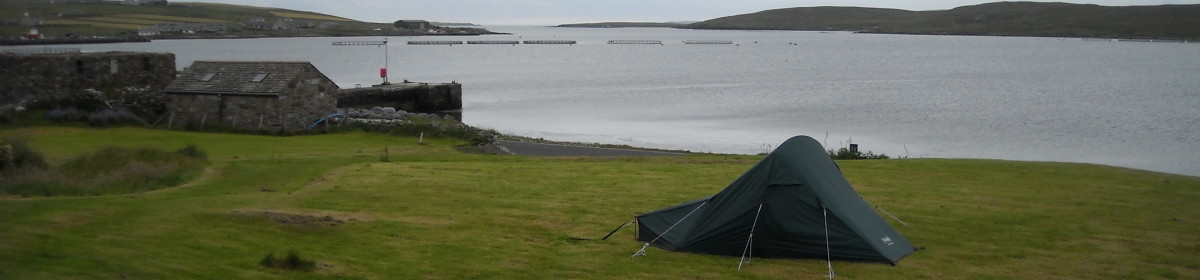
Arriving at the airport terminalairfield / toilet with a runway attached, I hoisted my collection of bags as they were passed out of the plane, National Express style, and wandered over to the people waiting to collect passengers. Quickly finding Simon, who it turns out was based at the Fair Isle observatory when I was there in 2010, I piled everything into the Landrover and we drove the few minutes to the bird observatory and hostel where I’m camping for the next 3 nights. I had wanted to stay in the hostel so I wouldn’t need to worry about carrying camping gear on the tiny plane, but it was fully booked with people who are in North Ronaldsay filming a children’s programme for CBeebies. Although I’m camping (£5 a night) I can still use the hostel facilities – fortunate as otherwise I wouldn’t be able to cook as I don’t think I’d have been allowed to carry fuel on the flight (though liquids and sharp objects were no problem).

tent
My home for 3 nights

I got my tent up and retired to the hostel kitchen, which I had to myself, to cook up enough food to last several days and using all the fresh vegetables I’d bought in Kirkwall.

back to this morning

I was up, showered and leisurely breakfasted and ready to head out for just after 10am. Just as the electricity went off. It doesn’t usually go off; they’ve had mains electricity here since 1983, but today, and possibly tomorrow, there are workmen here doing something to the powerlines meaning the electicity is off for the whole island until 5pm this evening.

heligoland trapI explored the area around the hostel, spotting a couple of heliogoland traps (used to trap birds for ringing) and trying to get to a gorgeous white beach. But there was no way my brain was ever going to be capable of figuring out the knots tying the gate firmly into position and I couldn’t be bothered climbing over as I wanted to focus on the north part of the island anyway.

I veered off track to check out a standing stone – the only one known to have

standing stone
spot the hole

a hole in it, and then stuck pretty much to the main road which took me from the bottom to the top of the island. I wanted to get to the north so I could visit the old and new lighthouses.

The old lighthouse was built in 1789 by Thomas Smith and is one of Scotland’s oldest lighthouses. The 70ft stone tower which was topped with oil burning lamps and copper reflectors cost £199 to build. In 1806 the building of Start Point lighthouse on Sanday made the North Ronaldsay beacon redundant and it was decommissioned in 1809, its lantern being replaced with a giant stone ball. old lighthouseIt was soon realised that North Ronaldsay did need its own lighthouse and a new, much higher one was built close to the original beacon. At 139ft it was, and still is, the highest land based lighthouse in the British Isles. Originally its red brick exterior was left au naturel, but in 1889 it was painted with a couple of white horizontal bands to aid visibility.

lighthouseI was going to have a look at the old lighthouse first but as it began to rain heavily I made for the new lighthouse which I knew had a cafe and visitor centre I could shelter in. I paused inside the open door at the bottom of the lighthouse itself and then, as the rain eased slightly, went for a wander round the buildings. The former lighthouse keepers’ cottages are now rented out as holiday lets by the National Trust for Scotland (and very nice they looked too, from the tiny peek I had through the windows).

The cafe was full of lunching BBC film crew and so I had a look round the exhibition rooms. One room had photos and exhibits concerning North Ronaldsay in general and the other was more specifically on the lighthouse and the lives of the keepers. There are a few short films but due to the power cut I wasn’t able to watch them. A smartly uniformed lighthouse keeper popped his head in the door and asked if I was the lady looking for a tour of the lighthouse. I wasn’t the lady he was looking for but I was a lady looking for a tour.

Billy had been keeper of the light for over 40 years and is a native of North Ronaldsay. He lost his full-time job when the light was automated in 1998 but still looks after it when need be and also acts as tour guide. Today he was in the role of TV star as he was the lighthouse keeper the BBC were here to film. The short 15 minute programme involves Billy showing his (real) grandson around the island and telling him about his life as a lighthouse keeper. He told me he would be with the film crew till about 2.30pm and then he’d be able to do my tour. As the crew had finished their lunch and were getting back to their filming, I went into the cafe to have my lunch.

The menu was somewhat limited due to the power cut but I was still able to have a steaming bowl of home-made carrot and coriander soup with home-made wheaten bread followed by home-made tangy lemon drizzle cake and cream and a cafetierre of fresh coffee.

The man running the cafe had time to talk to me as I was now the only person there. He’s originally from Essex and has been on the island for two and a bit years. His wife is a nurse practitioner and got fed up working in a busy surgery with 18,000+ patients on the list. She said she wished she worked on a small island with few people and lo and behold there happened to appear an advert for exactly her job on a small island with few people. Although there aren’t many people on the island, as it is an ageing population she is still kept quite busy. As for the man (let’s call him Mark, as I can’t remember what he was called but think it may have been Mark), he’s got himself settled with his role running the cafe, everything home-made, and giving tours of the adjacent wool mill.

Whilst I waited for Billy to finish up with the film crew Mark offered me a tour of the wool mill. None of the machinery was running of course, due to the lack of power, but he was still able to show me around and explain how everything worked. The mill began when it became unprofitable to send fleeces south to be processed. A chance comment at a science fair in Kirkwall led to a North Ronaldsay couple going on a fact-finding mission to Canada to research small-scale wool mill equipment. It all looked good and the investment was made. Now the islanders can wash, de-hair (North Ronaldsay sheep, like Cumbrian Herdwick sheep, but unlike any others, have wool next to their skin and hair on the outside), card, spin and wind their own wool. The hair, by the way, shows as black threads in the wool and is the part of a jumper that gives it an itch factor. As well as hair being removed, lanolin and large amounts of sand are washed out of the fleeces. This leads to a big reduction in the actual weight of the end product when compared to  the fleece at the start of the process.

mill mill mill mill

As my tour finished, Billy appeared and I was straight off on my tour of the new lighthouse. A quick climb up 176 steps (despite being 64 Billy practically skipped up them; I had to stop for a breather) and we were out on the veranda that runs around the top of the lighthouse just below the light.

lighthouse
We stood on the sheltered side, out of the wind whilst he told me the history of the lighthouse. The views looked pretty good today but on a really clear day it’s possible to see Fair Isle, Sumburgh Head and Foula.

view from lighthouse view from lighthouse

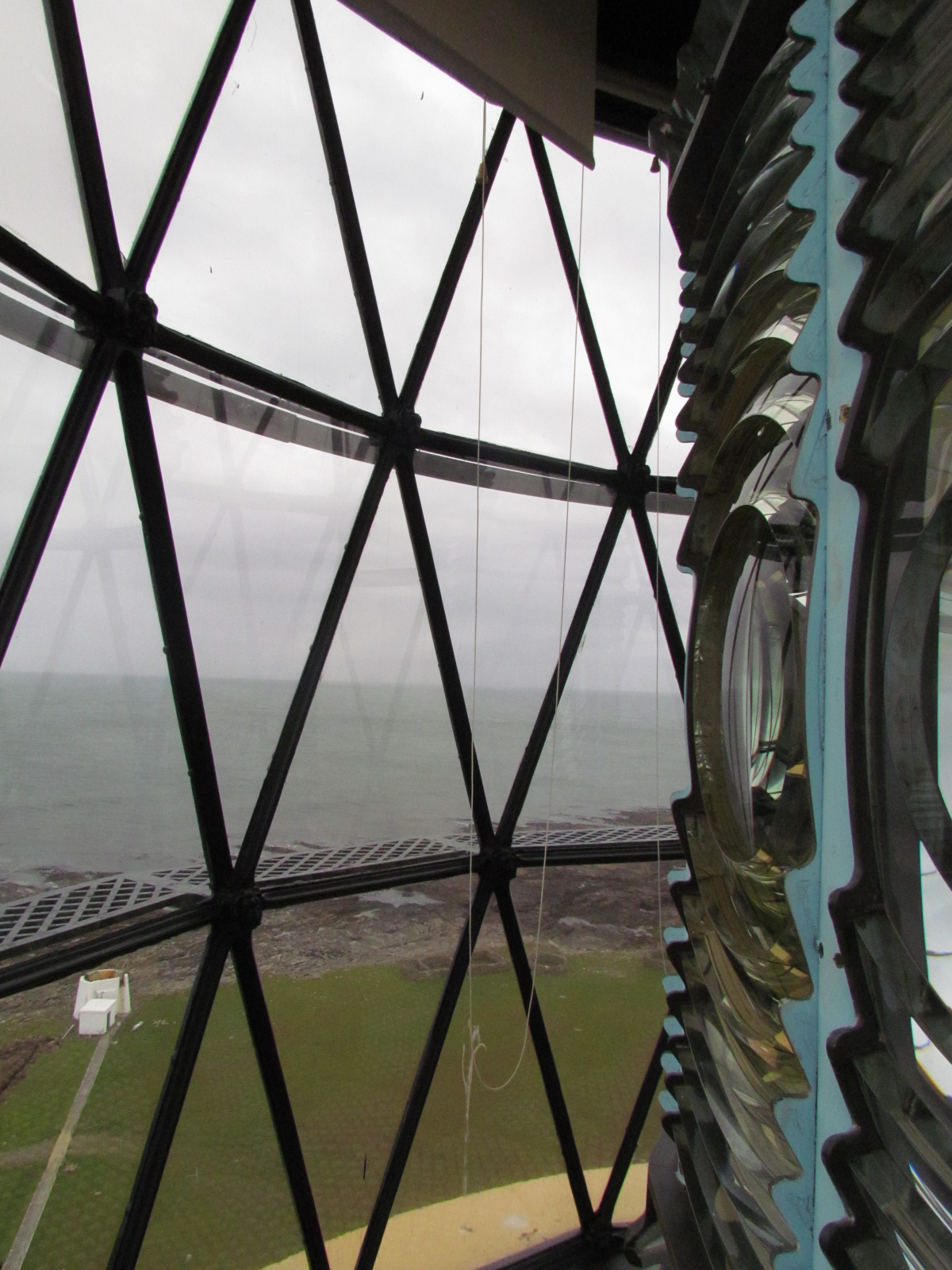
lighthouseDucking back inside we went up into the light itself. The Fresnel lens is made up of many curved and flat layers. Although these days the light runs off electricity with its own generator in case of power cuts, the old parafin lamp is still there. Looking through the lenses everything shimmered, rainbows flickered and images doubled, tripled and flipped upside-down psychedelically.lighthouse

Billy covered the light-sensors with cardboard to fool them into thinking it was dark. Over a few minutes the bulb came on and started at first to glow blue, but then to get brighter and brighter. Although the bulb itself has a steady glow and does not flash, the revolving lenses make it appear to flash every 10 seconds. Each lighthouse has its own sequence of flashes meaning they are easily identifiable. The beam can be seen for 24 nautical miles. Once the light-sensors were exposed to the light again the bulb switched off immediately.

lighthouse
The light slowly came on
foghorn
foghorn

Back downstairs, Billy walked me over to the fog horn, no longer used as ships can pick up the lighthouse by radar now when it is foggy. A cone shaped piece of machinery fastened just outside the light recognises when a radar is searching and appears as a dot with initials NR on the ship’s radar monitor. Billy had intended to put the fog horn on so I could hear it, but then realised it wouldn’t work with the power off.

lighthouse keeper
Billy outside his lighthouse

old lighthouseLeaving the new lighthouse I walked over to the old lighthouse which is covered in scaffolding. Funding has been secured via a TV programme to renovate it and the hope is to eventually have a staircase inside so people can also go up inside this one.

I started what I felt would be long walk back to the bird observatory at the other end of the island, but was picked up by Charlie, an ageing local with not too many teeth. He drove me all the way back and seemed like a real character. He had a few funny stories to tell on the short journey. He’s been up the lighthouse many a time himself as he was involved in painting it and told me he’d painted the 176 stairs I’d walked up.

Back at the bird observatory I sat in the lounge, with windows on three sides and enjoyed some evening sun.  

bird observatory
bird observatory and hostel

Already thinking about next year …

Collecting ideas for next summer.

I might have only just started out on this year’s summer holiday but I’m already getting ideas for next year.

I’ve been following Helen Lloyd’s blog on her travels to Central Asia which have included getting the Trans-Siberian Express and going to Mongolia, and this has got me wondering if, in six weeks, I would have time to get the Trans-Siberian Express from Moscow to Beijing and the Trans-Mongolian Express for the return journey, whilst still having time to actually see things. If it’s possible I would get to tick two challenges off my list in one go.

Yesterday morning I was chatting to an Austrian women at the campsite in Yell. She has travelled all over Europe in her van and this includes Norway. She told me I shouldn’t be worried about Norway being expensive as the UK is the most expensive place she has travelled in. She said fuel is more like regular European prices than UK prices (we seem to pay in pounds what others pay in euros) and it’s easy to wild camp and many towns have council provided showers. Taking my van I’d be able to take a lot of my own food and so wouldn’t have to worry too much about food prices. So now I’m also thinking about Norway for next summer. Of course if I go to Norway I have to go to Hell and so that would also be a challenge ticked off my list.